Product Overview
Superelastic Nitinol sheet and plate (ASTM F2063, NiTi, 54.5-57.0 wt% Ni) is a precision cold-rolled nickel-titanium shape memory alloy in flat, broad form — engineered as the starting material for laser-cut, stamped, waterjet-cut, and EDM-fabricated medical device components. Sheet and plate provide the largest two-dimensional form factor in the Nitinol product family — from 0.01mm foil for micro-stents and photochemical etching, through 0.1-3.0mm sheet for laser-cut cardiovascular stents and orthopedic fixation plates, to 3.0-20mm plate for machined spinal implants and structural aerospace actuators. Princeton Powder supplies Nitinol sheet and plate in both Superelastic (Af -20 to +40°C) and Shape Memory (Af +20 to +120°C) grades, with five surface finishes, custom Af specification (±5°C DSC-verified per ASTM F2004), and full ISO 13485 medical device traceability. The defining advantage of sheet/plate over other Nitinol forms is its broad, flat geometry enabling high-throughput 2D manufacturing processes — laser-cut stents from a single sheet produce hundreds of identical devices per run, stamped orthopedic plates maintain uniform thickness across complex geometries, and EDM-machined spinal implants achieve tolerances impossible from wire or strip.
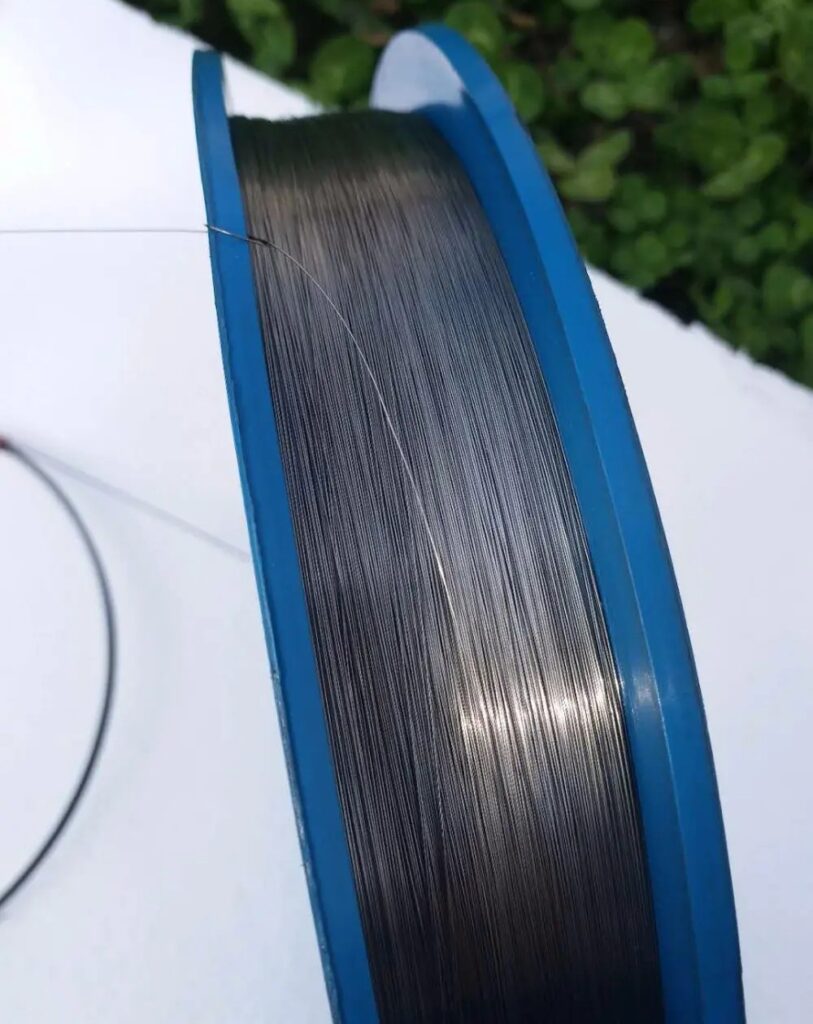
Sheet vs Strip vs Wire — Which Nitinol Form?
| Form | Thickness | Width | Primary Manufacturing Process | Best For |
|---|---|---|---|---|
| Sheet / Plate (this page) | 0.01–20mm | Up to 800mm | Laser cutting, stamping, EDM, waterjet, photochemical etching | High-volume stent production, orthopedic plates, machined spinal implants, aerospace structural components |
| Strip / Foil | 0.05–2.0mm | 0.5–100mm | Slitting from sheet; narrow-width processing | Narrow components, formed clips, flat springs — see our strip page |
| Flat Wire | 0.05–2.0mm | 0.3–10mm | Wire drawing + flattening | Orthodontic archwires, stone retrieval baskets — see our flat wire page |
| Straight Wire | N/A (Ø 0.025–7.0mm) | N/A | Wire drawing, coiling | Guidewire cores, springs, actuator wires — see our straight wire page |
All forms manufactured to ASTM F2063 under ISO 13485:2016 with DSC-verified Af (±5°C) and ISO 10993 biocompatibility. Princeton Powder supplies the complete Nitinol product family — sheet, strip, flat wire, and straight wire — from a single qualified source.
Material Properties & Medical Implant Comparison
Nitinol Sheet vs 316L Stainless Steel vs Ti-6Al-4V — Orthopedic Plate Material Selection
| Property | Nitinol Sheet (this product) | 316L Stainless Steel | Ti-6Al-4V ELI | Advantage |
|---|---|---|---|---|
| Elastic Strain Recovery | Up to 8% — superelastic | <0.5% — permanent yield | <1% — permanent yield | Nitinol — 16×+ SS, 8×+ Ti. Eliminates permanent deformation in dynamic implants |
| Elastic Modulus | 75-83 GPa (austenite) / 28-41 GPa (martensite) | 193 GPa | 110 GPa | Nitinol — 60% lower than SS. Closer to cortical bone (~18 GPa) — reduced stress shielding |
| Constant Force Plateau | Yes — superelastic plateau delivers constant stress over 6-8% strain | No — linear elastic to yield | No — linear elastic to yield | Nitinol only. Enables dynamic compression plates that maintain constant bone contact force during healing |
| UTS | 700-1,500 MPa (cold-worked) | ~585 MPa (annealed) | ~900 MPa (annealed) | Nitinol — comparable or superior to Ti |
| Corrosion Resistance | TiO₂ passive layer — stable in body fluids, pH 5.2+ | Cr₂O₃ passive — susceptible to pitting in chloride (body fluid) | TiO₂ passive — excellent, comparable to Nitinol | Nitinol = Ti; superior to SS in chloride environments |
| Biocompatibility | ISO 10993 — decades of implant use; Ni release ≤0.1 µg/cm²·day (electropolished) | ISO 10993 — Ni/Cr release concerns in some patients | ISO 10993 — excellent, no Ni | All three ISO 10993 compliant; Ni sensitivity managed by EMP surface |
| MRI Compatibility | Excellent — low magnetic susceptibility | Poor — ferromagnetic; significant artifact | Good — non-ferromagnetic | Nitinol — best for post-operative MRI imaging |
| Manufacturing from Sheet | Laser cut, EDM, waterjet, stamp — then shape-set at 400-500°C | Laser cut, stamp, machine — no shape-setting | Laser cut, stamp, machine — no shape-setting | Nitinol’s shape-setting adds a unique manufacturing step: cut flat → fixture to 3D shape → heat-set → electropolish |
Why Sheet? The Manufacturing Logic of Nitinol Medical Devices
The vast majority of Nitinol medical devices begin as flat-rolled sheet. The manufacturing sequence: cold-rolled Nitinol sheet (controlled %CW) → laser-cut device pattern → expanded to 3D shape on fixture → shape-set at 400-500°C/5min → water quench → electropolish. The sheet’s thickness uniformity (±0.01-0.05mm), surface finish, and cold work level at the rolling stage directly determine the final device’s Af temperature, fatigue life, strut width consistency, and biocompatibility. This is why specifying sheet from an ISO 13485-certified supplier with DSC-verified Af — not just buying “Nitinol plate” from a metals catalog — determines whether your laser-cut stent passes FDA fatigue testing at 400 million cycles (10-year implant equivalent) or fails at 10 million.
Applications
Laser-Cut Cardiovascular Stents & Medical Device Frameworks
The largest-volume application for Nitinol thin sheet (0.10-0.50mm, TiNi-SS, Af 33±3°C, pickled surface) is laser-cut self-expanding cardiovascular, peripheral, and neurovascular stents. The manufacturing sequence — laser-cut flat pattern → expand to 3D on fixture → shape-set at ~500°C → electropolish — converts a flat Nitinol sheet into a complex, fatigue-resistant implant in a single production run producing hundreds of identical devices per sheet. Princeton Powder’s controlled cold-rolling (±0.01mm thickness tolerance) and DSC-verified Af ensure consistent strut width and transformation temperature — the two parameters that determine stent radial force, fatigue life, and regulatory compliance.
Orthopedic Fixation Plates, Spinal Implants & Surgical Instruments
Nitinol standard sheet and plate (0.50-3.0mm, Nitinol #1 SE) are laser-cut or stamped into orthopedic bone plates, spinal interbody cages, and dynamic compression plates. Nitinol’s unique superelastic constant-force plateau enables dynamic compression plates that maintain consistent bone-to-plate contact force throughout the healing process — unlike SS or Ti plates where force decays as bone remodels. For spinal fusion, Nitinol’s lower elastic modulus (75-83 GPa) vs Ti (110 GPa) reduces stress shielding of the bone graft — promoting fusion rather than graft resorption. Princeton Powder supplies Nitinol plate in thicknesses to 20mm for machined spinal and orthopedic implant manufacturing.
Aerospace Actuators, Consumer Electronics & Industrial Components
Beyond medical, Nitinol sheet serves: Aerospace: SM502 plate (Af +45 to +90°C) for satellite solar panel deployment hinges and thermal management louvers — activated passively by orbital temperature cycling, requiring zero power. Consumer electronics: Superelastic Nitinol #2 sheet (Af 0 to +10°C) for foldable smartphone hinge reinforcement plates — surviving >200,000 fold cycles without permanent deformation. Industrial: Nitinol sheet gaskets and seals for cryogenic and high-temperature flanges where the superelastic recovery maintains seal integrity through thermal cycling that would cause conventional metal gaskets to leak.
Why Choose Princeton Powder Nitinol Sheet & Plate
- Foil (0.01mm) to Plate (20mm) — Full Thickness Range: From neurovascular micro-stent foil to machined spinal implant plate — one ISO 13485-certified supplier covers your entire Nitinol sheet/plate portfolio.
- DSC-Verified Af ±5°C — ASTM F2004 Per Lot: The most critical Nitinol specification. A 0.1 at.% Ni shift changes Af by ~10°C. Princeton Powder’s controlled composition and cold-rolling process ensure the Af you specify is the Af you receive.
- Five Surface Finishes — Oxide to Polished: Oxide for cost-effective pre-processing; pickled for laser-cutting surface prep; bright annealed for stamping; polished for instrument components; ground for precision plate. The right finish for every downstream manufacturing process.
- Up to 800mm Wide × 2,500mm Long — Production-Scale Sheet Dimensions: Maximizes devices per sheet for high-volume laser-cutting and stamping production lines. Custom cut-to-size available.
- Documented Cold Work %CW — The Key to Consistent Shape-Setting: The cold work level during sheet rolling determines the final Af after shape-setting.
FAQ
Nitinol sheet vs strip vs wire — which form for my medical device manufacturing?
Sheet/plate (this page): Broad, flat — for laser cutting, stamping, EDM. Maximizes devices per sheet for high-volume production. Strip: Narrow coil form — for continuous photochemical etching lines. Wire: Round cross-section — for guidewire cores, springs, formed wire components. Princeton Powder supplies all four Nitinol forms from the same ISO 13485-certified facility — simplifying supplier qualification.
What thickness tolerance can I expect for laser-cut stent manufacturing?
±0.01mm for thin sheet (0.10-0.50mm) — the standard for cardiovascular stent manufacturing. A ±0.01mm thickness variation translates to ~2% strut width variation (at 0.5mm nominal) — within the acceptable range for maintaining radial force uniformity. For neurovascular stents with strut widths <50µm, specify ±0.005mm foil tolerance.
Superelastic vs Shape Memory — which grade for my application?
Superelastic (SE, Af below body temp): Af -20 to +18°C for room-temperature SE; Af 33±3°C (TiNi-SS) for body-temperature implants — stents, guidewires, orthopedic plates. Instant shape recovery on unloading — no heating required. Shape Memory (SMA, Af above body temp): Af +20 to +90°C — thermally activated devices, bone staples (activate at 37°C), aerospace deployment mechanisms. Deform at low temp → recover shape upon heating through Af.
What surface finish should I order for laser cutting vs stamping?
Laser cutting: Pickled/Etched — clean, oxide-free surface for consistent laser absorption and minimal recast layer. Stamping: Bright Annealed — oxide-free, uniform surface for consistent formability and springback. Finished instruments: Polished — mirror finish for reduced friction, easier sterilization. Contact our technical team for application-specific recommendation.
Can you supply sheet in continuous coils for automated laser-cutting lines?
Yes — continuous coil is available for thin sheet (0.10-0.50mm, up to 300mm wide) — enabling automated reel-to-reel laser cutting for high-volume stent production. Cut-to-length sheets for lower-volume and R&D applications. Same ASTM F2063 quality, DSC-verified Af, and full lot traceability.
Research & Technical References
Nitinol Shape Memory Alloy: Materials and Applications in Medical Devices
SAGE Journals — J Engineering in Medicine, 2026 — Gholizadeh & Sivarasu provided the most comprehensive review of Nitinol in medical devices, confirming that sheet thickness uniformity (±0.01mm) and Af temperature consistency (±5°C) are the two raw-material-level parameters determining laser-cut stent fatigue performance at 400M cycles. Practical takeaway: Princeton Powder’s ±0.01mm thickness tolerance (thin sheet) and DSC-verified Af per lot provide the consistency this review identified as essential for FDA PMA-level cardiovascular implant manufacturing.
Superelastic Nitinol Fatigue Behavior in Simulated Physiological Environments
Journal of the Mechanical Behavior of Biomedical Materials, 2024 — Demonstrated that cold work level (%CW) during sheet rolling is the primary metallurgical variable controlling Nitinol fatigue life — not just surface finish. Optimized %CW (20-30%) combined with electropolishing achieved >10⁷ cycle fatigue life at 0.8% alternating strain in 37°C simulated body fluid. Practical takeaway: Princeton Powder’s documented %CW per lot — not just Af and thickness — provides the process control that determines your device’s fatigue performance in the human body.
Contact our Nitinol technical team for the full reference list and application-specific sheet/plate selection guidance.